Sign Up for our Newsletter!
1-866-UGO-WILD (846-9453)

Posts Tagged ‘Seal River Heritage Lodge’

Birds, Bears & Beluga Whale Snorkeling! A Great Summer at Seal River Heritage Lodge.

Our Birds, Bears & Belugas Adventure is winding down now, but the summer of 2012 was certainly one of our best ever for walking with polar bears and swimming with beluga whales! A big thank you goes out to our fabulous guests!

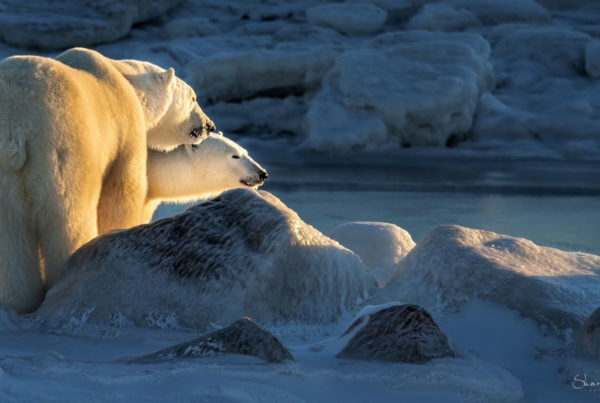
This year the bears were aided by a late thaw, which resulted in them being fat and healthy when they ventured off the ice and into our polar bear viewing domain. Spots for the 2013 Birds, Bears & Belugas Adventure are already filling up. Watch for Seal River Heritage Lodge to be featured in future IMAX, National Geographic and Discovery Channel productions. Churchill Wild is truly becoming the home of the world’s next great safari!

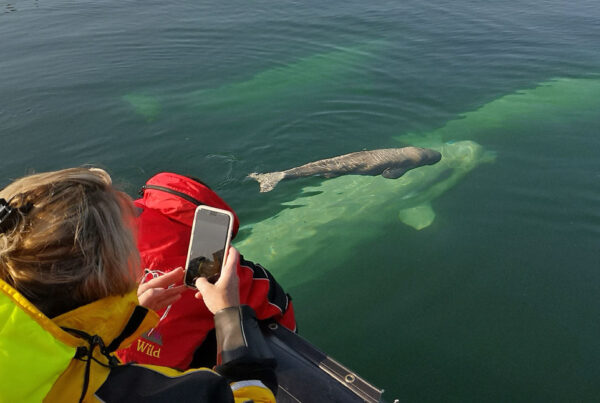
Many people are intrigued by the beluga whale swims. Below is a short video to give you an idea of what you’re missing. It is an incredible experience!

YouTube Preview Image

One of the aspects not readily apparent in the video above is the fact that the whales are singing.  Beluga whales are known as the “Canaries of the Sea” because of their chirping. When your head is in the water you can hear them. If you sing or hum through your snorkel, the whales respond in kind. Whether it be a Broadway show tune, your alma mater song or the Beatles’ “Yellow Submarine” — they all worked for guests this summer!

Below are a few photos from one of our beluga whale swims this summer. Click the image to scroll through the photos or click Show picture list to view the photo gallery.

New Photo Contest for Seal River Heritage Lodge Guests

Seal River Heritage Lodge

Seal River Heritage Lodge

The Province of Manitoba nominated the Seal River to the Canadian Heritage Rivers System (CHRS) in June 1987. The nominated section is 260 km long and extends from the junction of the North and South Seal rivers, at Shethanei Lake, to Hudson Bay. This is the area we hike to and swim with beluga whales during our Birds Bears & Belugas Adventure every summer.

Named for the harbour seals that are found up to 200 km upstream from Hudson Bay, Manitoba’s Seal River rushes through open spruce forest, tundra and boiling rapids. Too rugged for even the early fur traders, the river’s remote vastness remains home to spectacular wildlife such as caribou, wolverine, polar bear and 3,000 beluga whales that summer in its estuary on Hudson Bay. The Seal River’s designation to the CHRS was primarily based on its exceptional natural heritage.

We recently became aware of a contest that many of our guests may be interested in entering and here it is. Please note that this is not a Churchill Wild contest:

Experience Canadian Heritage Rivers Photo Contest

Help capture the splendour and the excitement of the Canadian Heritage Rivers! Parks Canada’s Canadian Heritage Rivers System (CHRS) is pleased to partner with Rapid Media’s Canoeroots and Family Camping Magazine for a second year to launch the Experience Canadian Heritage Rivers photo contest.

Photos can be submitted in the following four categories:

1) Canadian Heritage Rivers and Family;

2) Canadian Heritage Rivers and Nature;

3) Canadian Heritage Rivers and Cities; and

4) Canadian Heritage Rivers and Adventure.

The contest runs from May 15 to October 31, 2012. Winning photos will be published in the Spring 2013 issue of Canoeroots and Family Camping Magazine and will also tour throughout North America in the 2013 edition of the Reel Paddling Film Festival. To learn more about the contest and to submit photos, visit the Canoeroots Web site: http://www.canoerootsmag.com/chrsphotocontest/ .

The contest seeks to increase Canadians’ sense of connection to the Canadian Heritage Rivers System, and to the outstanding natural, cultural and recreational heritage of these special rivers. Through the contest, Canadians can communicate their unique and exciting perceptions and experiences of Canadian Heritage Rivers.

The CHRS is the world’s largest river conservation program, with 42 rivers spanning close to 11,000 kilometres.  The program was established in 1984 by federal, provincial and territorial governments to conserve rivers with outstanding heritage values, to give them national recognition, and to encourage the public to enjoy and appreciate them.


Seal River Heritage Lodge Receives TripAdvisor.com 5-Star Award!

Churchill Wild Trip Advisor Certificate of Excellence 2012

Churchill Wild TripAdvisor Certificate of Excellence 2012

We regularly monitor our pages at TripAdvisor, as many of our guests post glowing reviews of their experience. When we checked the mail last week we found this “Certificate of Excellence” from TripAdvisor.

A sincere thank you to all of our guests who posted reviews and made us #1 for Speciality Lodging in Churchill!

Here is an excerpt from one of our reviews at TripAdvisor:

The word  “unique” is often used to describe travel experiences and all too often you are left disappointed as the reality often fails to live up to your expectations. Mike and Jeanne Reimer and the whole team at Seal River deliver an exceptional experience that allows you to observe Polar Bears up close and at eye level whilst staying in a lodge so comfortable that it is easy to forget just how remote this part of the world is… Words or pictures cannot really describe the thrill of being just feet away from a Polar Bear in its natural surroundings looking into its eyes…

Read more about Churchill Wild and Seal River Heritage Lodge at TripAdvisor.com

Northern Lights: Sky Pirouettes of the Aurora Borealis

Northern Lights at Churchill Wild's Polar Bear Lodge

Northern Lights at Churchill Wild's Polar Bear Lodge

Guest Post by Tess Pajaron

You may have heard the phenomenon referred to as the Northern Lights, but whatever you want to call it, the Aurora Borealis is an amazing sight that every traveler should experience.

This natural light show will take your breath away, putting to shame any laser show you might see at a rock concert. The most common color you will see is a yellow-green glow, but reds and blues may also be scattered about the night sky in all different shapes and forms that you will never forget.

What causes Aurora Borealis to occur? A constant stream of electrically charged particles called the “solar wind” that travel to the earth from the sun. When these particles reach the earth’s atmosphere, they smash into atoms and release energy. This energy is what causes the brilliant light show known as Aurora Borealis.

Where Should You Go to Get the Best View of the Aurora Borealis?

The Aurora Borealis is called the Northern Lights because it happens near the North Pole. It’s is a good idea to try and get as far north as possible. In North America, Canada is a perfect place to get a great view of this amazing event. Plan a trip for between September and November, the best months to view the Aurora Borealis in all its natural beauty.

Once in Canada, the key to seeing this stunning phenomenon is to get yourself as far away from any urban areas as possible. The man-made lights of the city block your ability to see the full display of natural light that the Aurora Borealis gives off. Getting away from this urban “light pollution” can be the difference between seeing just a glimpse of the Northern Lights, and getting the full experience of this one-of-a-kind natural light show.

Where Should You Stay When You Travel to See the Aurora Borealis?

As you now know, staying in the city is not a great idea if you want to experience the Northern Lights. However, there are some amazing lodges in the Canadian wilderness that are perfect for viewing the Aurora Borealis.

You might want to check out Churchill Wild, a company that offers an incredible wilderness experience complete with your choice of a few different lodges. Fly in to one of their remote locations for their trademark polar bear safaris and stay right in the middle of the wild. Their Seal River Heritage Lodge, Dymond Lake Eco-Lodge, and Nanuk Polar Bear Lodge are all perfect viewing spots along the Hudson Bay.

While at the lodges, there are many other things to see and do in addition to viewing the Aurora Borealis. And you don’t even have to rough it. Their lodges are full of creature comforts, offering gourmet meals and comfortable private rooms.

Your safari with Churchill Wild starts with a commercial flight from Winnipeg to Churchill. The breathtaking charter journey to the lodges will give you a bird’s eye view of the vast land you are about to explore. But don’t worry, the flight is low enough that you can see all of the amazing animals you will be flying over.

Once at the lodge, there will be many daytime activities to choose from. Churchill Wild specializes in polar bear viewing, which is definitely something that anyone who takes a trip to the Canadian wilderness should check out.

Tess Pajaron

Tess Pajaron

Walking and hiking tours through the surrounding areas are also provided. Then at night, you will have a front row seat to the awe-inspiring natural spectacle of the Aurora Borealis!

Tess Pajaron is part of the team behind OpenColleges. She has traveled to many different countries and loves to discover new and exciting places.

Seal River: Wild, Rugged and Natural

The Seal River is located approximately 10 kilometers to the south of Seal River Heritage Lodge.
Seal River Heritage Lodge

Seal River Heritage Lodge

Where the Seal River meets the Hudson Bay there exists a hot spot for polar bears, seal, beluga whales and a myriad of Arctic wildlife  – it is truly one of the world’s incredible natural beauties!

The area is rich in history and unique characteristics that make it one of the most desirable destinations for the world’s dedicated adventure travellers.

It is also a Canadian Heritage Rivers System.

Below is a “fact sheet” from the official website that outlines what makes this area so special.

:::::

Of the four major rivers in Northern Manitoba, the Seal River alone remains completely undeveloped, wild and rugged.

In contrast to the impoundments on the Churchill and the Nelson, and the rich fur trade and exploration history of the Hayes, the Seal River shows virtually no evidence of modern human activity. Although in the days before written history the river flowed through a major native hunting and fishing ground, the Seal now attracts only a few native people and small groups of hardy wilderness adventurers.

For these groups, travel downriver may require two to four weeks of difficult yet exhilarating boating. First, an extensive cold-water lake is encountered where winds can create dangerous waves; then, numerous long rapids in a totally isolated, sub-arctic environment test their survival skills; finally, travellers must navigate a boulder-strewn tidal estuary.

The Province of Manitoba nominated the Seal to the Canadian Heritage Rivers System in June, 1987. The nominated section is 260 km long and extends from the junction of the North and South Seal rivers, at Shethanei Lake, to Hudson Bay.

Geography

The Seal River is located in the roadless wilderness of Northern Manitoba, 1000 km by air charter from Winnipeg. The Seal estuary is 45 km across Hudson Bay from Churchill. Other than Churchill (population 1,300), the only settlement in the area is Tadoule (population 250), a small Chipewyan community located along the South Seal River at Tadoule Lake.

The Seal begins its course at Shethanei Lake ringed by the magnificent sand-crowned eskers that are so much a part of the Seal River landscape. Then, passing stands of black spruce, its velocity increases toward the Big Spruce River Delta, and accelerates dramatically into the rapids and gorges which surround Great Island. Beyond the island, the river leaves the boreal forest and enters a sparsely-treed, transitional subarctic environment of tundra and heath, christened by the natives the “Land of Little Sticks”. Finally, the Seal flows through barren arctic tundra, huge boulder fields and complex rapids, spilling into a beautiful estuary where its freshwaters mix with the salt of Hudson Bay.

Except for the less than two dozen skilled rafting and canoeing parties which visit the river each year, and the occasional native fisherman and trapper, there is virtually no human activity along the Seal River. The remote, roadless nature of this region has meant that activities such as mining exploration have been costly, air-supported ventures, and even the discussion stages of any development of the area’s hydro potential are many years away.

Natural Heritage

Nomination of the Seal River to the CHRS was based primarily on its outstanding natural heritage:

  • The Seal is the largest remaining undammed river in Northern Manitoba.
  • The river valley contains excellent representation of the subarctic boreal forest of the Precambrian Shield, and the arctic tundra of the Hudson Bay Lowlands.
  • The valley is also habitat for 33 species of plants which are rare in Manitoba, and supports some unusually large white spruce and tamarack.
  • Glacial features are everywhere. 300 metre-wide eskers extend up to several hundred kilometres in a north-south direction, sometimes as lake peninsulas or submerged landforms. Northern Manitoba’s largest drumlin fields were formed here by the glaciers, as were extensive boulder fields.
  • The estuary area is actually rebounding from the weight of the glaciers at a rate of about 53 cm per century, among the fastest in the world.
  • The Seal also provides habitat for undisturbed wildlife populations. Common here are moose, black bear, wolf, fox, snowshoe hare, ptarmigan, Canada goose, ducks, otter and beaver. The much rarer wolverine, golden and bald eagle, osprey, and polar bear are also found. Even more important, the river’s estuary is the calving and feeding grounds for 3000 beluga whales, part of the largest concentration in the world and the Seal is winter range for part of the 400,000 strong Kamanuriak caribou herd. (Editor’s Note: This is part of what makes Churchill Wild Safaris at the Seal River Heritage Lodge the best polar bear experience in the world! There is no better place on the Hudson Bay to see the belugas, polar bears and other Arctic wildlife.) 

Churchill mapHuman Heritage

The Seal River area played an important role in native hunting, fishing and travelling. The white man found the area less hospitable. Isolated and difficult to navigate, with infertile soils and a cold climate, the Seal was quickly ruled out as a travel, trade or settlement corridor.

The river’s nomination to the CHRS was not based primarily on its human heritage, but there are several historical features of interest:

  • The number of prehistoric artifacts and archaeological sites along the Seal is unusually large. Fire rings, scrapers, flakes, projectiles and hammers are often exposed on the surface of eskers at campsites and along the caribou trails by the river, between Tadoule and Great Island. The age of these finds spans the Paleo-Indian peoples of 7,000 years ago, to the Taltheili Tradition of 1 A.D. to 1700 A.D. (Editor’s Note: During our  safaris guests often see tent rings, grave sites, fire pits as well as bone and tool fragments. This area was investigated and documented by archeologist Dr. Virginia Petch in the 1990′s) 
  • The remains of Chipewyan and European trappers’ cabins, and 100 year old grave sites marked by picket fences on top of eskers, reflect more recent occupation.
  • The river is also closely associated with one European explorer. Samuel Hearne of the Hudson Bay Company left Fort Prince of Wales, near Churchill, in February 1771, on his second of three attempts to locate the copper fields which the Indians said bordered the northern ocean. Enduring incredible hardship, Herne followed the Seal River inland on foot to Shethanei Lake. He then back-tracked to the Wolverine River which he followed north into the barrenlands. Hearne became the first white man to discover the Arctic Ocean, and his journals and maps were a major contribution to the knowledge of Canada’s north until the early 20th century.
  • An abandoned mining camp on Great Island, operated by the Great Seal Prospecting and Developing Syndicate between 1953 and 1958, is typical of mineral exploration camps which operated in the north during the 1940’s and 1950’s. Well preserved log buildings, a dynamite storage shack, a drilling platform, and other remnants are scattered throughout the site.

Recreation

The river’s nomination to the CHRS was based in part on its ability to provide an outstanding whitewater wilderness river trip. A trip from Tadoule to Hudson Bay would encounter, in order: 20 km of lake travel, with three major sets of rapids and a boulder field between Tadoule and Shethanei lake; 40 km of open, shallow water on Shethanei Lake, where dangerous waves and heavy winds can make travel impossible for days; 64 km of variable channels through numerous choppy rapids and a narrow, deep gorge; 28 km of intermittent whitewater along the scenic channel of Great Island including a possible 3 km portage; 124 km of flat country, transitional subarctic tundra forest and boulder field rapids; 4 km through the estuary’s maze of marshes, tidal flats, islands, shelves and reefs passable only on the north channel and then only when properly timed with the tides; and, finally a rendezvous with a float plane or water taxi from Churchill on the Hudson Bay shoreline.

In addition to a rugged wilderness river trip, the Seal River offers other recreational opportunities:

Shethanei Lake is very reliable for trophy-size lake trout, and large northern pike, and grayling are present throughout the river.

  • Hikes to the top of eskers and rocky knolls are rewarded with 360 degree vistas of a totally natural environment. Short hikes along eskers and beaches, or across Great Island, allow modern-day explorers to follow the timeless migration path of the barren-ground caribou. Visitors can also retrace the steps of Samuel Hearne by climbing the esker that was his vantage point on Shethanei Lake.
  • Wilderness camping is possible at numerous sites along the western two-thirds of the river. However, toward Hudson Bay, only poorly drained campsites on densely-willowed river banks are found.

:::::

To see the Seal River you can book any one of the following Churchill Wild Safaris: