Sign Up for our Newsletter!
1-866-UGO-WILD (846-9453)

Posts Tagged ‘Seal River Heritage Lodge’

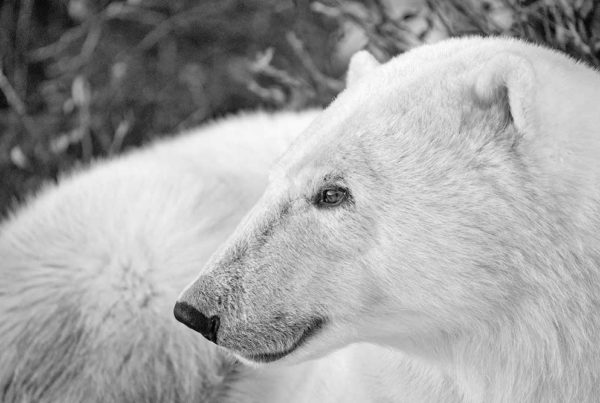
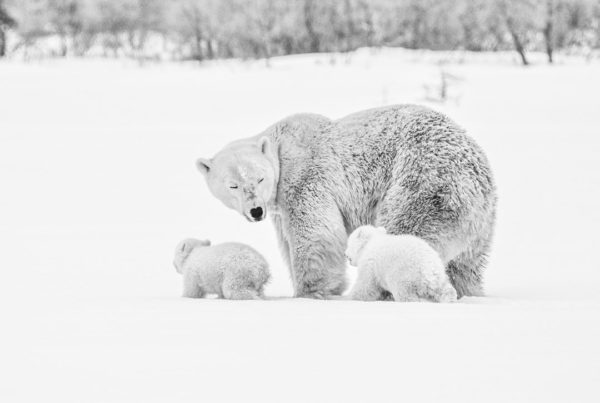
Polar bear looking for Cranberry Cake. With Butter Sauce.

Polar bear looking for Cranberry Cake at Seal River Heritage Lodge. JulieThompson Photo

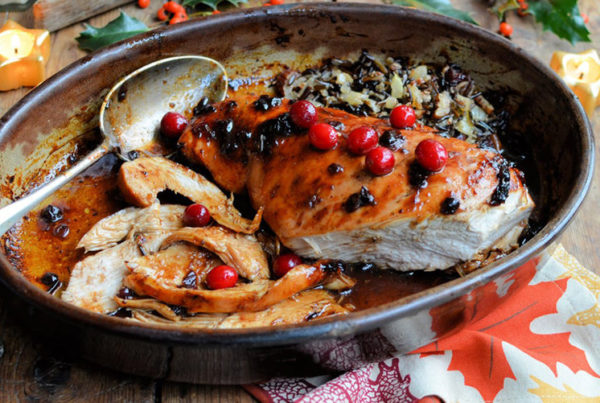
Cranberry Cake with Butter Sauce. Just one piece. Please...

This cool polar bear photo was taken by Julie Thompson at Seal River Heritage Lodge and it was attracting all kinds of attention on the Churchill Wild Facebook Page. It was suggested that the bear smelled the Cranberry Cake with Butter Sauce, a Lodge favorite from our Blueberries and Polar Bears Cookbooks. Hmm… well… it is delicious! The bear obviously knew that :)

Here’s what Julie had to say:

I tell people I walked amongst the polar bears just to see the looks on their faces.  Some can’t believe it’s possible.  They’ve never heard of such a thing.

“How close were you to one of the greatest predators on earth?” is usually a question which follows.

“Pretty close” I say, as they peruse our photo book with awestruck faces.

Standing outside of the lodge, we cautiously watched our resident bear approach.  He was an inquisitive one, determined to enter into our “home away from home.”

I think he enjoyed the attention and our company.  Always peeking into windows and pacing around the compound looking for a quick entry.  He was affectionately known as Snuggleputz.  The previous group staying at the lodge named him.  While there was much discussion surrounding renaming him, Snuggleputz is the only name which sticks in my mind.

This bear gave us fantastic photo opportunities throughout our stay.  With expert wildlife photographer, Dennis Fast, leading our group, we were always learning, whether it be out on a tundra trek or during one of his early evening fireside chats.  We met fantastic people from around the globe who shared in our love of photography, we ate great food and were welcomed into the lodge as if we were part of the family.

Perhaps Snuggleputz sensed this warmth, the fun and friendliness of the lodge and he just wanted a glimpse of it for himself.  If only someone would hear his knock.

Churchill Wild enhances environmental stewardship programs with installation of VBINE Vertical Access Wind Turbines at northern eco-lodges

VBINE ENERGY Vertical Access Wind Turbine - VAWT

VBINE ENERGY Vertical Access Wind Turbine - VAWT

Churchill Wild has always been devoted to minimizing their environmental footprint at their remote northern eco-lodges. Now they’re enhancing their environmental stewardship programs even further with the installation of Vertical Access Wind Turbines (VAWTs) manufactured by VBINE ENERGY in Winkler, Manitoba.

The combined power generated by the VAWTs and the solar panels currently in place at their eco-lodges will virtually eliminate the need to use fossil fuels at Seal River Heritage Lodge, Nanuk Polar Bear Lodge, North Knife Lake Lodge and Dymond Lake Lodge. Generators will still be in place for backup power, but the combination of the current solar-panel system combined with VAWTs is expected to provide for almost, if not all, their power needs in the future.

“The beauty of it is that we have a battery storage system,” said Mike Reimer of Churchill Wild. “The power generated from the VAWTs and the solar panels is stored in the batteries and we draw off of them. And they’re eco-friendly and economical. There’s less noise pollution, less of a carbon footprint and we’ll be paying substantially less than the $1-$1.30 per kilowatt it costs for diesel generated power.”

The VAWTs were invented by Barry Ireland about six years ago and refined by an engineering team. Their showcase installations include the Dr. David Suzuki Public School in Windsor, Ontario, Canada and Wayne State Universityin Detroit, Michigan, but the rugged VAWTs were also designed to work in remote northern locations. “They were originally designed to work on smokestacks and silos,” said Ireland. “We had to build them so that the center wouldn’t rotate. We also had remote communication towers in mind when we built them. Many of those towers are powered by diesel and the VAWTs cut costs by quite a bit. That also means they will be popular with many northern lodges and outfitters.”

YouTube Preview Image

VBINE is currently working with Canadian Solaron a combination wind/solar solution that will work for northern communities. “VAWTs are generating a large amount of interest because of the significant cost savings that can be realized,” said Ireland. “And the fact that the big windmills won’t work in the north. They ice up, they have too much vibration and they won’t go into the permafrost. The VAWTs are the only ones that will work up north.” VAWTs mount easily on existing buildings; they’re only two meters in width; they’re quiet and they’re suitable for grid tie-in or battery storage. And because of the vertical design, VAWTs can take wind from any direction. They start generating power at wind speeds of 1.2 meters per second and run 24/7 generating 5 kilowatts of power with a 25 mph wind. They have a permanent magnet generator with two long-life bearings, no drive shaft and no slips springs or brushes. The lifespan of the VAWTs is estimated at 30 years with very little maintenance. Their sleek design also minimizes interference with wildlife.

Hudson Bay CAT Train in Blizzard

CAT Train in a pending Hudson Bay blizzard

The first of the Churchill Wild VAWTs were hauled up to Seal River Heritage Lodge last week via CAT train (caterpillar pulling a freight sled) across the Hudson Bay sea ice, which is still about six feet thick.

Hauling tons of freight across the Hudson Bay ice in -20 degree weather is actually better than doing it at 0 degrees. The ice can get sticky and wet in warm weather, making for dangerous conditions. While there is generally no immediate danger from polar bears, which are still further out on the ice filling up on seals before the ice melts, the weather can still cause problems.

“The wind chills can get to as low as -40,” said Reimer. “And there’s always the possibility of blizzards, flooding sea ice and slush holes. CATS have actually gone through the ice on a couple of occasions.”

The trip takes about 15 hours from Dymond Lake Lodge to Seal River Heritage Lodge and Churchill Wild utilizes one of their two CAT track-type tractors, 1956 and 1972 models built by Caterpillar.  But how fast does that CAT really go? “About two miles an hour downhill with a tailwind,”  said Reimer.

To learn more about how VBINE ENERGY VAWTs can benefit your operations and goals for a greener future, please visit http://www.VBINE.com, call their head office at (204) 325-0228 or e-mail info@vbine.com

Churchill Wild polar bears to appear on CBC’s The Nature of Things in Polar Bears: A Summer Odyssey

Polar bear being filmed at Seal River

Filming polar bears at Seal River. Photo Credit: Nick Garbutt

Special to Churchill Wild
by +George Williams

If you’ve ever wondered what it’s like to visit the polar bears at Seal River Heritage Lodge or Nanuk Polar Bear Lodge, you’ll want to make sure to watch the world premiere of Polar Bears: A Summer Odyssey on Sunday, April 8 at 7 p.m. on CBC TV’s The Nature of Things with David Suzuki. You’ll see some of our Churchill Wild polar bears!

The wildlife documentary, much of which was filmed over a 12-month period in the vicinity of Churchill Wild’s polar bear lodges, tells the story of a young male polar bear who must survive his first summer alone on land without his mother, after the ice breaks up early on Western Hudson Bay and prevents him from hunting seals. The youngster’s struggle to survive is back-grounded and influenced by one of the most important environmental stories in history: climate change.

Directed by Adam Ravetch of Arctic Bear Productions and produced by Arcadia Content in association with CBC’s Science and Natural History Documentary Unit, Polar Bears: A Summer Odyssey features stunning images shot with eight different types of cameras including: a polar bear collar-cam; a remote control truck-cam; a mini heli-cam and several underwater cameras.

“Filming in 3D was much more work,” said Ravetch. “But we wanted immersive images so the audience could experience what it’s really like to be up close at ground level with polar bears. It required multiple cameras operating at the same time to produce the special 3D effects and three of us including Stereographer Indy Saini and Camera Engineering Specialist Stewart Meyer to get the distances between the objects and between the lenses just right. Stewart also developed a smaller mobile camera system that could produce some very rare images.”

Churchill Wild’s Mike Reimer and polar bear guides Terry Elliot and Andy MacPherson were also essential in getting the ultimate polar bear shots.

“It’s a huge challenge to film in 3D in the arctic,” said Ravetch. “The guides have to have experience specifically with polar bears. They concentrate on safety so we can focus on camera angles and getting the shots we need. Being up close with the bears is quite spectacular for a filmmaker, but safety is paramount. The last thing we want is for a person or a bear to get hurt. You’re not in a cage or a vehicle, you’re at ground level with the polar bears. I’ve always worked at ground level, but there are very few places where you can photograph polar bears like this. Seal River and Nanuk are among the best places on the planet for this type of wildlife photography.”

Polar bear sees reflection on Hudson Bay.

Reflection of a polar bear. Hudson Bay.

Ravetch is no stranger the arctic. He and Sarah Robertson co-directed Arctic Tale for National Geographic. Ravetch also directed some amazing in-field sequences swimming with polar bears and walruses for the IMAX production To The Arctic and was cinematographer for one of the segments on the BBC series Frozen Planet, to name just a few of his many illustrious wildlife and nature film credits.

Ravetch sometimes camps out for 4-6 weeks at a time while making his films in the arctic, which makes for a very serious and sometimes dangerous adventure (see full interview here), but Churchill Wild was lucky to have him and his crew as guests at Seal River Heritage Lodge and Nanuk Polar Bear Lodge during various segments of the filming process in 2010 and 2011.

“I woke up to Jeanne’s (Reimer) omelettes every morning,” said Ravetch. “Churchill Wild offers people the very unique experience of getting up close on the ground with the polar bears. Within a day of a arriving at the Lodge people can see polar bears on the tundra. But they still have a warm safe bed at the Lodge to come back to, and of course the delicious food.”

Thanks Adam! And just to clarify for future guests, Churchill Wild doesn’t actually “own” any polar bears.

They simply get close to them.

Polar bear at sunset near Seal River Heritage Lodge.

Nature at its finest.

Polar bears prove “fridge photographer” wrong at Seal River

Big polar bear near Churchill Wild's Seal River Heritage Lodge, Hudson Bay, Manitoba.

One. Big. Polar Bear. Photo Credit: Carol Moffatt.

Special to Churchill Wild
by +George Williams

Carol Moffatt describes herself as a “fridge photographer”.

Churchill Wild begs to differ.

The 47-year-old Reeve at the Municipality of Algonguin Highlands downplayed the fact that she took some fabulous shots of polar bears, landscapes and northern lights while attending our Polar Bear Photo Safari last October at Seal River Heritage Lodge.

“I don’t take photographs to sell them,” said Moffatt. “I’m a self-taught amateur photographer with a background in journalism. If someone wanted to offer me money for a photograph I might sell one, but really, if I have a nice photo, I put it on the fridge for a month.”

Moffatt has taken more than a few marvelous photos during adventures that have taken her from backpacking in the Australian outback, to Africa, to visiting the 2010 volcanic eruption in Iceland as well as Peru, Ecuador, the Galapagos Islands, Alaska,  Yukon and the Southwestern United States. You can view a selection of her photos on her Web site at http://cmoff.smugmug.com/

“The Yukon was magical,” said Moffatt, “but the Churchill Wild trip was the most interesting of all in terms of remoteness.  Part of the adventure was just in getting there. The whole trip was very well organized and I’d never flown in a Twin Otter before.”

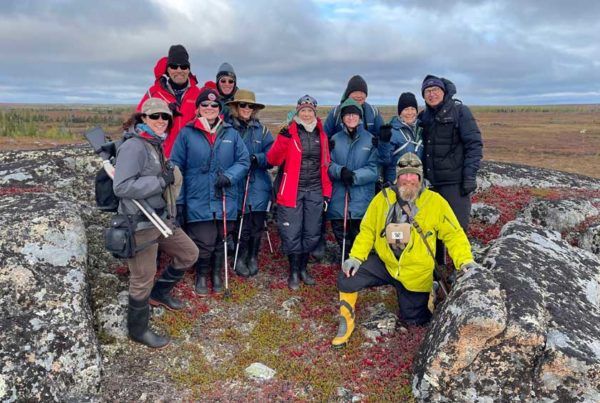
Moffatt was part of group of 14 photographers and spouses involved in a trip led by professional photographer Mike Beedell.

Photographers walking with polar bears at Churchill Wild.

Walking with polar bears. Photo Credit: Carol Moffatt.

“There were photographers of every talent level in our group,” said Moffatt. “Everyone was very  helpful. We were all united in a shared cause and it just worked.”

“We went on hikes across the tundra and saw polar bears every day, but breakfast was always a special experience. You just never knew what might be on the other side when the (polar bear protective) shutters were opened up in the morning. The bears come right up to the lodge. And an arctic fox appeared several times!”

“The food was phenomenal,” said Moffatt, impressed by being able to see desserts for later in the day being made fresh every morning in the new kitchen while they were enjoying breakfast. “And the Reimer family made fabulous hosts – ever present but never in your face.”

But what about the walking with the polar bears?

“Our guides, Andy and Tara, would scout out the polar bears in the area ahead of time and walk us out into a position where we could photograph them,” said Moffatt. “They were quite attuned to our needs as photographers. And you could definitely tell they knew the bears, the landscapes – and photographers in general. They would move us to the left and right, back and forth and they could sense when we needed something different. And it wasn’t all polar bears, there was always something different to photograph while we were wandering along — interesting landscapes, lingonberries and other plants, the shifting ice and how the sun reflected on it…”

Two items related to polar bears stood out on the trip for Moffatt. On one occasion when a polar bear got particularly close to an employee hauling water with the ATV, and another when a large male bear chased a female and her cub away from the fenced compound at the Lodge.

Polar bear bites fence at Seal River Heritage Lodge.

These teeth are real. Photo Credit: Carol Moffatt.

“It was on the final day of our trip,” said Moffatt. “A mother and her cub were just outside the compound when she sensed the presence of the big male and took off at high speed out on to the (Hudson) Bay to protect her cub. You can tell when they’re bigger than usual, and this was very large male. We also got some good close shots of the bears through the fence, but we were always very careful to keep everything out of their reach — cameras, scarves, loose clothing.”

“I’m told that Polar bears are the deadliest land animals on the planet. One of the guides said these bears can pull an 800-pound seal out of the water in one swoop. We’re the zoo animals up there with us on the inside of the compound and the animals on the outside looking at us. But I wanted a real adventure and I sure got one. The tundra buggies just wouldn’t have worked for me. The whole trip was a delight.”

She has a fridge full of photographs to prove it.

For the Love of Reading: Polar bear trip results in children’s books for New Jersey physician turned photographer

Polar Bear Dreams by Daniel D'Auria

Polar Bear Dreams by Daniel D'Auria

Special to Churchill Wild
by +George Williams

It’s unlikely physician Daniel D’Auria thought his photography hobby would turn him into an author, but that’s exactly what happened after his Polar Bear Photo Safari with Churchill Wild.

The 54-year-old from Tabernacle, New Jersey, has now created three children’s books about polar bears, each featuring a selection of photographs from the 17,000 he captured at Churchill Wild’s Seal River Heritage Lodge. Images from his trip can also be seen at his LifeScapes Imaging Web site.

“I never knew where wildlife photography would take me,” said Daniel. “But I had an idea for a book for preschoolers – a whimsical, rhyming book about polar bears.

“We have four children ages 8-23, and some of my fondest memories are of reading to them to when they were growing up. I wanted to create something that would get parents reading to their children and get children interested in wildlife. Parents are interested in the beautiful photos. Children are curious about the bears. And because parents are spending quality time with their children reading the books to them, it gets the children more interested in reading.”

Polar Bears Aren't White You Know by Daniel D'Auria

Polar Bears Aren't White, You Know! by Daniel D'Auria

A noble cause to be sure, and it’s been a long journey to get to the stage of published author, but Daniel has enjoyed every bit of it. He took up photography in high school and spent the last year or so photographing weekly in New Jersey before being able to participate in some of the more elite photography adventures.

Daniel’s wife probably had something to do with ramping up the photography hobby in the family. A former dental hygienist with an interest in sports, she participated in the Sports Photography Workshop at the Summit Series of Photography Workshops. Daniel tagged along and this led to him attending the Summit Landscape and Wildlife photography workshop a few years later. Unfortunately, his medical career still didn’t leave him the time he would have liked to have spent on photography — until recently.

About two years ago, Daniel hired an associate, which allowed him to free up some time for longer trips to elite photography havens that included the Richard Clarkson Photography at the Summit Workshop in the Grand Tetons of Wyoming; the J. N. “Ding” Darling National Wildlife Refuge located on the subtropical barrier island of Sanibel in the Gulf of Mexico; the Bosque del Apache National Wildlife Refuge in New Mexico; and finally the Polar Bear Photo Safari at Churchill Wild’s Seal River Heritage Lodge on the West Coast of Hudson Bay in Manitoba, Canada.

I Wish I Had a Polar Bear by Daniel D'Auria

I Wish I Had a Polar Bear! by Daniel D'Auria

“The Churchill Wild experience was the trip of a lifetime,” said Daniel. “We first heard about it from Scott Fryer and his wife Paula, who he met while at the Photography at the Summit Workshop in Jackson Hole, Wyoming. We went on the trip as part of a group with Bob Smith of Elk Meadow Images, who organized a photography workshop for 14 people at Churchill Wild.

“The trip from Winnipeg to Churchill with CalmAir was wonderful. And we had a lovely flight on a small plane from Churchill to the Lodge. It was my first trip on a small plane and we had an excellent pilot. Seal River Heritage Lodge is beautifully hand constructed and extremely comfortable. The staff was unbelievably accommodating and the food was outstanding. It was just like home.

“Our guides, Andy and Terra, really made us feel like we belonged, not like we were goofy outsiders. They would scout the polar bears first to see where they were at, and then we would go on two hikes a day. The furthest we had to go was about a mile and we were able to set up for polar bears, arctic fox, ptarmigan and briefly an arctic hare.”

Being able to take on-the-ground photos of wildlife has been Daniel’s modus operandi in photography, so the daily hikes worked out perfectly for the group. This despite the fact that Daniel brought his 28 lbs. 2½ foot 600 mm lens, which it was suggested he consider leaving at home.

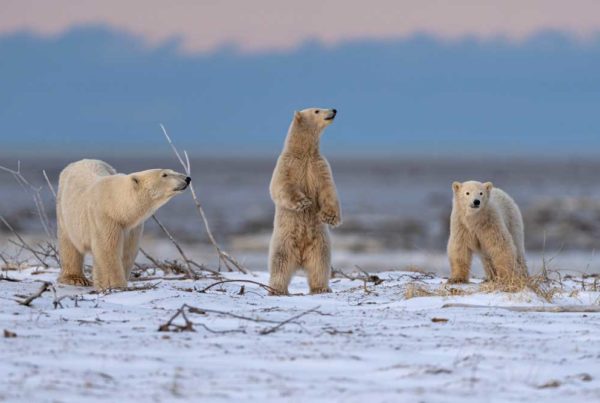
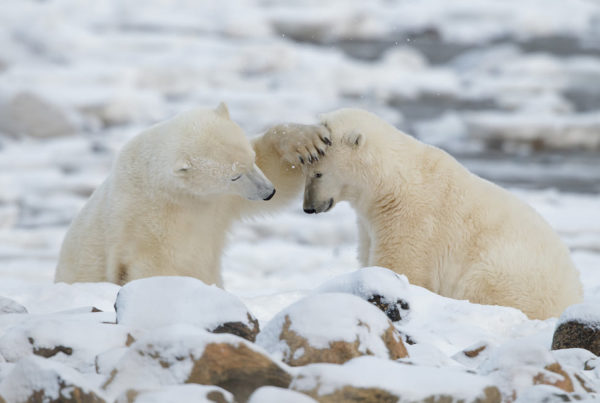
Polar bears playing near Churchill Wild's Seal River Heritage Lodge

Three is not a crowd! - Photo Credit: Daniel D'Auria

“I’m used to carrying my lenses in the wilderness,” said Daniel. “Whenever I’m photographing I have one smaller lens on my right shoulder, the heavier one on my left, and my backpack. So that wasn’t a problem.

“And we weren’t interested in going out in tundra buggies. I wanted to be on the ground with the polar bears. I like the freedom of the out of doors, the solitude of hiking the trails, and the beauty of observing nature. I don’t want to do it from inside a vehicle unless it is an absolute necessity. Whenever you’re out in the wild there will be certain element of danger involved. In Jackson Hole, Wyoming, I carry bear spray. In New Jersey it’s not an issue.

“Sure there is some fear of bears. But we learned there is a mutual respect between the polar bears and the people up there in Churchill. If done carefully and properly there is an acceptable risk. We never felt unsafe at any time. I think our group would uniformly say we would like to repeat our experience at Churchill Wild.”

Daniel went on to describe how much he enjoyed the spectacular landscapes, sunrises and sunsets over Hudson Bay. Flat, rugged and desolate, “it was like looking out over the surface of mars when the tide was out. You’d think you just went to another planet.

Polar bears cuddling near Seal River Heritage Lodge in Manitoba.

Cuddling on the Coast - Photo Credit: Daniel D'Auria

“But that’s the best thing about wildlife photography. You can never predict what you’ll see. Every day is a little bit of joy. And when I get back from a trip like this – my family notices the difference in me.”

Besides being a new author, Daniel also donates framed polar bear and wildlife prints to his local hospital. “I sell a few prints,” he said, “But the people at the hospital love them. They have them up on the walls and they always get nice comments from the patients and visitors.

“Wildlife photography has made me a much happier and more content person. It’s like being rich… but in different way.”


Daniel D’Auria’s polar bear books for children can be found on Amazon.com at the links below. He’s also working on two more children’s books about birds and is always interested in pursuing joint ventures that will also benefit a good cause in some way. Thank you Daniel!